


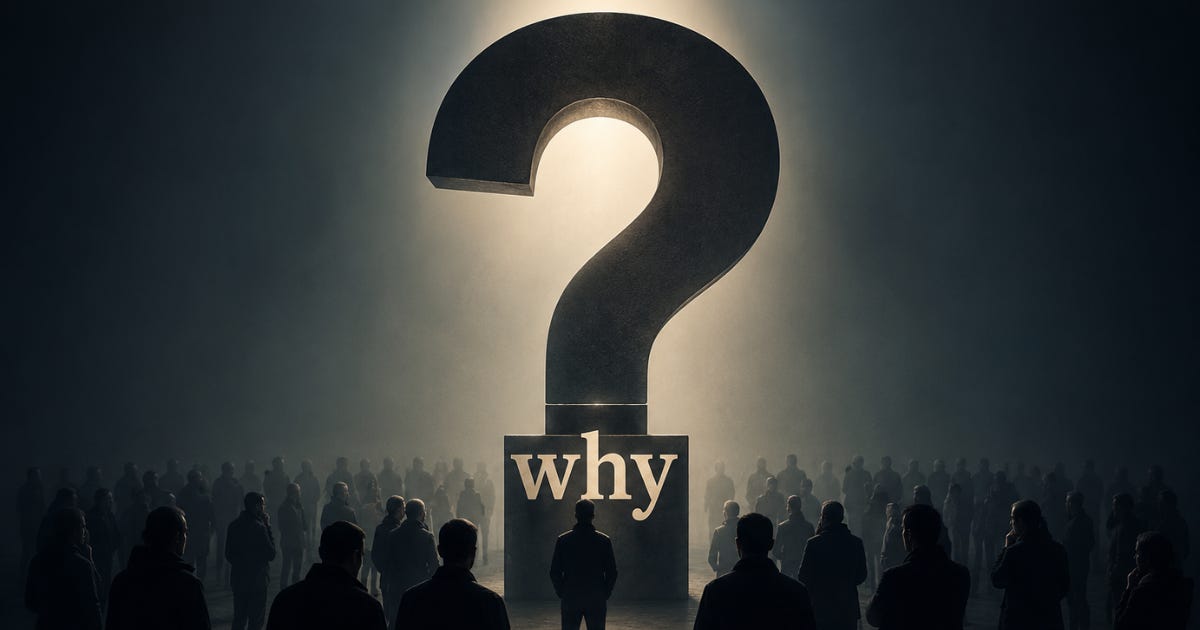
I was 16 years old when I asked a question that I thought was simple. Growing up in an Orthodox Christian family, I wanted to understand why women were not allowed to enter the altar of the church. I asked a few church members, hoping someone would explain the reason behind the tradition. Instead of answering me, they seemed disturbed by the question itself. They asked me, “Why are you asking such questions?”
That moment has stayed with me for years. I was not trying to disrespect my faith or challenge anyone’s beliefs. I was simply curious. I wanted to know the reason behind a practice that affected half the congregation. Yet, what surprised me was not the lack of an answer but the discomfort my question created. It was perhaps the first time I realised that people are often more afraid of questions than they are of the issues those questions raise.
Ironically, Christianity itself teaches us that questioning is not a sin. St. Thomas, one of Jesus’ own apostles, refused to believe in Christ’s resurrection simply because others told him it had happened. He wanted proof. He wanted to see and touch Jesus’ wounds before believing. Today, he is remembered not as someone who lacked faith but as someone whose questions ultimately strengthened it. If one of Christ’s closest followers could ask questions without shame, why has questioning become something many people discourage today?
A Childhood That Encouraged Curiosity
Perhaps my habit of questioning began much before that incident. As a humanities student, I was fascinated by history, politics and society. I was never satisfied with memorising facts; I always wanted to understand the reasons behind them. During social science classes, I constantly asked questions, sometimes more than my classmates.
Rather than discouraging me, my teachers appreciated this curiosity. They often told me that I had developed a habit of questioning everything and advised me never to lose it. They encouraged me to think critically instead of accepting information blindly. Looking back, I realise they gave me one of the most valuable lessons of my life: that education is not about collecting answers but about learning how to ask better questions.
It was perhaps natural that I eventually chose journalism as my career. I was drawn to communication, current affairs, politics and social issues because they constantly demanded deeper understanding. Journalism school only strengthened what my teachers had already taught me.
We learnt about news values, ethics, reporting, editing and accuracy. However, above everything else, our professors repeatedly reminded us that journalism begins with curiosity. We were taught to question everything we saw and heard. The famous five W and one H Who, What, When, Where, Why and How became the foundation of our education. Among these, “why” always stood out because it is often the hardest question to answer. Anyone can describe what happened, but explaining why it happened requires honesty, accountability and critical thinking.
Like all human beings, even our professors occasionally became uncomfortable when questions challenged their own beliefs or ideologies. Yet, the classroom remained a place where questioning was largely encouraged rather than feared.
When Religion Could Not Explain Itself
Questioning did not stop after school. During my university years, one of my friends advised me not to enter a temple while I was menstruating. I asked her a simple question: “Why?”
She could not give me a convincing explanation. She repeated what she had been taught, but there was no clear reasoning behind it. I was not mocking anyone’s faith or trying to insult religious practices. I genuinely wanted to understand the logic behind the belief, as I clearly know all these are the products of patriarchy.
That conversation made me realise that many traditions continue not because people understand them, but because very few dare to ask why they exist in the first place. Asking questions does not weaken faith; sometimes it strengthens it by replacing blind acceptance with informed understanding.
Sad Difference Between Journalism in Theory and Practice
After completing my studies, I entered the corporate media industry with the idealism that journalism school had given me. However, the professional world soon taught me that questioning is often appreciated in textbooks but not always in newsrooms.
At one point in my career, some of my carefully researched and hard-written articles were removed without my knowledge or permission. I asked only one question: “Why?”
That single question was enough to make some people angry. What followed became one of the most painful experiences of my professional life, leaving me emotionally traumatised in ways I still find difficult to describe. There are many aspects of that experience I still cannot speak about openly. Yet everything began with one simple question that should never have been controversial.
That experience made me realise that many institutions welcome obedience far more than curiosity.
When ‘Why’ Becomes Political
Over time, I came to understand that this fear of questioning extends far beyond religion and workplaces. It is visible even in politics.
In a democracy, journalists are expected to question those in power. Yet we increasingly witness debates about political leaders avoiding unscripted press conferences or limiting opportunities for direct questioning. Whether it is the Indian Prime Minister or Tamil Nadu Chief Minister, the absence of regular, open interaction with the press naturally raises another question: Why?
Democracy does not survive because citizens remain silent. It survives because citizens continue asking questions. Unfortunately, asking uncomfortable questions today often comes with labels. A person questioning government policies may suddenly be called anti-national, anti-government or even an “urban Naxal.”
I know where I stand. I consider myself a proud patriot. I deeply admire freedom fighters like Jhansi Raani, Bhagat Singh, Jatin Das, Sukhdev and Rajguru. They questioned injustice because they loved their country enough to imagine a better one. Patriotism is not about agreeing with everything; it is also about having the courage to question what is wrong.
There is perhaps a psychological explanation for this discomfort. From childhood, many of us hear the word “why” only when we are being scolded. Parents ask, “Why did you do this?” Teachers ask, “Why didn’t you complete your homework?” Over time, the word begins to sound like an accusation rather than an invitation to think.
As adults, we carry that conditioning with us. When someone asks us “why,” we instinctively become defensive because we feel judged rather than engaged in conversation.
There is another reason, too. Questions expose contradictions. They challenge authority. They force people to explain decisions that they themselves may have never examined critically. It is often easier to silence the person asking the question than to search for an honest answer.
Questioning Is Not Rebellion; It Is Responsibility
Sometimes I wonder why I never learned the art of pleasing everyone. I often see people choosing silence, sugar-coating uncomfortable truths or flattering those in positions of power. I have never been good at that. Perhaps I never will be.
Since childhood, questioning has been a natural part of who I am. It has earned me appreciation from some people and criticism from others. It has opened doors but has also closed many. Yet I cannot imagine living differently because asking questions is not an act of rebellion. It is an act of responsibility.
As journalists, citizens and human beings, we owe it to ourselves to ask questions. Progress has always begun with someone refusing to accept “because that is how it has always been” as a satisfactory answer.
Today, I understand why people are often afraid of the word “why.” It has the power to disturb comfortable narratives, expose injustice and demand accountability. A question may appear small, but it can shake institutions, challenge traditions and inspire change.
People may silence individuals, suppress stories or dismiss voices. They may even succeed for a while. But ideas have a life far greater than the people who carry them. Every major social reform, scientific discovery and democratic movement began because someone dared to ask a question that others were afraid to ask.
I have come to believe that questioning is not merely something I do, it is part of who I am. Even if answers do not always come, I will continue asking. Because the day we stop asking “why” is the day we die, stop learning, stop growing and stop holding power accountable.
Perhaps that is exactly why so many people fear one simple word: Why?